
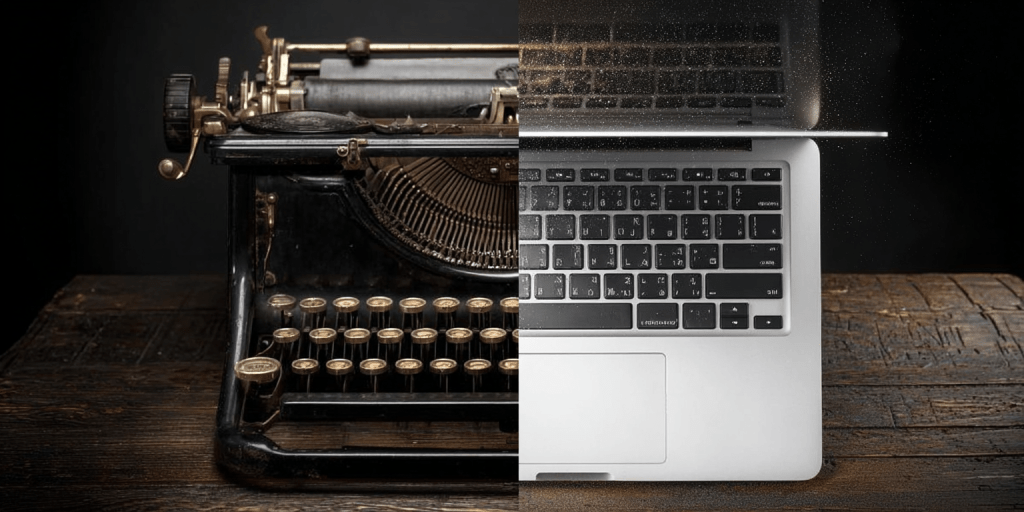
Every so often, someone posts an ironic hot take on a social media thread declaring that blogging is dead.
Nope. Not yet, and not anytime soon.
It just doesn’t look like it did in 2005, 2010, or even 2020.
It grew up and diversified. It stopped trying to go viral and started aiming for something more lasting: trust, identity, and longevity.
From online diary to digital legacy
The early blogosphere was built on confessions, opinions, and hyperlinks. It was scrappy and exciting, but like everything else on the internet, blogging evolved.
Today’s blogs might look like:
- A founder’s newsletter hosted on a clean domain
- A podcast archive with written reflections
- A recipe blog that’s also a wellness hub
- A thought leadership platform for a solo consultant
- And of course, a journal-style personal blog
What’s different now is purpose.
Most modern bloggers aren’t just writing to write. They’re building something: a reputation, a community, a body of work, or perhaps a legacy.
Why people think blogging is dead
Let’s be honest, the perception exists for a reason.
Blogging had a heyday. In the early 2010s, especially with lifestyle and “mom blogs,” it was the go-to format for personal storytelling and online influence; however, things changed. Social media exploded, video dominated, new platforms emerged every year, and the word “blog” started to feel… dated.
Add to that:
- People now “post” everywhere but rarely call it a blog
- SEO became more complex and competitive
- Short-form content grabbed attention while blogs built depth
So yes, blogging feels like a thing of the past, but the urge to share, publish, reflect, and connect has never gone away; it just looks different now.
What people get wrong about blogging
Let’s clear this up:
- Myth 1: Blogging is just for writers → Actually, some of the best blogs belong to podcasters, coaches, designers, chefs, and photographers.
- Myth 2: You need to post every week → No. You need to post with intention. Quality and consistency matter more than frequency.
- Myth 3: Social media replaced blogs → Platforms control who sees your content. Your blog gives you control. Think about it: here today, gone tomorrow. There’s always some measure of risk (and yes, it does happen).
What blogging offers in 2025 (that social media doesn’t)
- It’s yours. You own the domain, the content, and the experience. No algorithm can delete it.
- It builds trust. Longform content signals authority, not just popularity.
- It’s findable. Blogs appear in search results, posts get shared, and ideas compound.
- It grows with you. Your blog can change lanes: from personal to professional or from niche to broad, any way you evolve.
Meet the new era of bloggers
At .blog, we see this shift every day:
- noahpinion.blog — a Substack-style economics and culture blog
- tim.blog — podcasting, longform interviews, and personal experiments
- digitalslowmad.blog — living slowly, working remotely
- annacullen.blog — reflective, grounded personal storytelling
Some people blog weekly, while others blog once a quarter.
However, all are carving out space to say something meaningful in their own voice, on their own terms.
Final thought: blogging is the long game
If social media is your billboard, your blog is your home.
If short-form is your hello, blogging is your conversation.
So no, blogging isn’t dead. It just stopped shouting to be noticed.
It started building something better and doing it on its own terms.

 Knock Knock WHOIS There