

Blog Academy → Step 4A: Creative → Audience Journey (Learner/Enthusiast)
You’ve chosen the Creative path. Now flip perspectives: this is your audience’s journey for this path—and how to design for it.
By now, you’ve chosen your path as a creator. Maybe you’re drawn to the creative side of blogging—sharing ideas, stories, inspiration, or knowledge. That’s your journey.
But here’s an important thing you don’t want to miss: your audience has a journey too.
Just like you, they move through phases. They don’t arrive ready to follow, trust, or advocate for you. They start curious, and over time, if you guide them well, they can become passionate enthusiasts who carry your message forward.
We call this the Learner/Enthusiast Journey—the psychological path of your audience as they shift from casual interest to genuine enthusiasm.
Understanding this journey matters because it helps you step into your audience’s shoes. When you see how their minds move, you can meet them at every stage—guiding them from curiosity to passion.
Every audience journey has a moment of conversion—the point where attention turns into action.
In the Learner/Enthusiast Journey, conversion happens when curiosity becomes commitment—when someone moves from consuming your content to investing in it (subscribing to your channel, enrolling in your program, or signing up for your newsletter). Your goal as a creator is to design for that moment—and then nurture what happens after.
Below is a visual map of that psychological path—from the moment someone becomes aware of you to the point where they actively share your work with others.
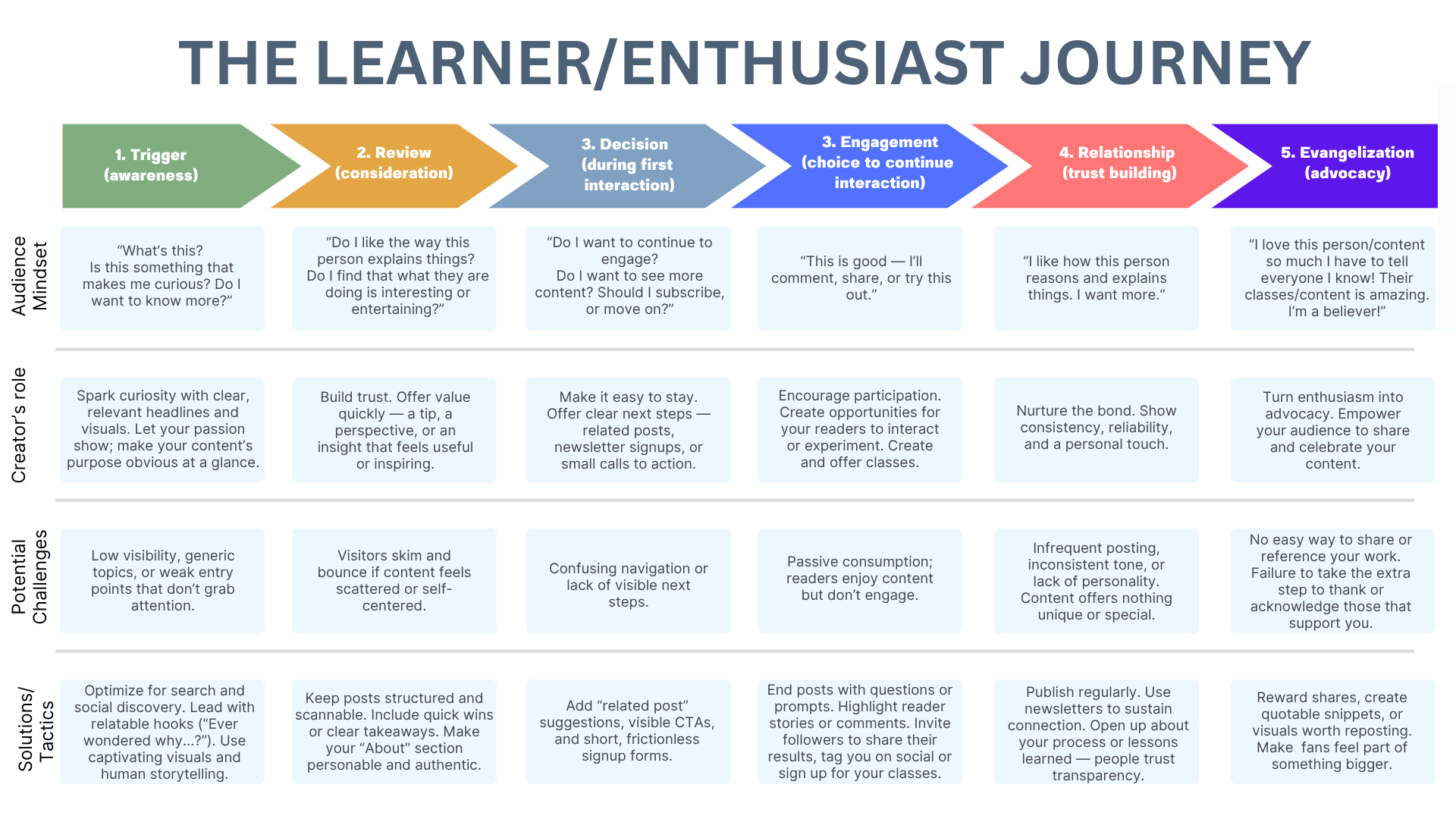
And remember: within your site and blog, you’ll always have people in different phases of this journey — first-time visitors, repeat readers, and loyal advocates. Designing for all of them is what makes your blog resonate long-term.
Stage 1: Trigger (awareness)
They’ve just discovered you—through search, social, or word of mouth.
- Audience mindset: “What’s this? Can it help me?”
- What you can do: Write clear, compelling titles. Make sure your site loads fast and looks trustworthy. Use social snippets that deliver quick value.
Stage 2: Review (consideration)
They’re scanning your site, deciding if it’s worth their time.
- Audience mindset: “Do I like how this person explains things? Are they entertaining? Do I admire what they’re doing?”
- What you can do: Strong About page, clean design, easy navigation. Offer quick wins—free tips, checklists, or short posts that deliver value fast.
Stage 3: Decision (first interaction)
They decide whether to bounce or stay.
- Audience mindset: “Should I read another post, subscribe, or move on?”
- What you can do: Suggest related posts. Add clear, low-friction CTAs (newsletter signups, follow prompts). Make the “next step” obvious.
Stage 4: Engagement (choice to continue)
They move from passive reading to active interaction.
- Audience mindset: “This is good—I’ll comment, share, or try this out.”
- What you can do: Invite feedback. Ask questions at the end of posts. Be active where your readers hang out and reshare their comments/creations.
Stage 5: Relationship (trust building)
They return regularly; your voice starts to matter more.
- Audience mindset: “I like how this person thinks. I want more.”
- What you can do: Publish consistently. Use newsletters to deepen the relationship. Share personal stories that build connection.
Stage 6: Enthusiasm → Evangelization (advocacy)
They don’t just follow—they share.
- Audience mindset: “This is so good, I need to tell others about it.”
- What you can do: Make sharing easy (buttons, quotable lines, visuals). Create “flagship” posts worth evangelizing—the kind of insights people want to be associated with.
What’s unique about this journey
The Creative Journey is about curiosity and exploration.
Your audience seeks inspiration, ideas, and ways to express themselves. They come to learn, create, or discover—and they stay because your content keeps their curiosity alive.
Takeaway
The Learner/Enthusiast Journey isn’t theory—it’s a practical map for empathetic design. Recognize each stage and build content/experiences that guide people from first click to passionate advocacy.
📝 Your Turn
Look at the map and consider your blog:
- How do new readers typically discover you?
- What makes them come back?
- Which stage feels strongest—and which needs work?
Next up in the Academy: we’ll keep the “choose-your-own-adventure” energy going and move into audience personas—so you can speak directly to the needs, doubts, and hopes of the people you most want to serve.


 Knock Knock WHOIS There