
.blog Academy → Step 5: Building Your Audience Persona
In Step 4, we explored the many ways audiences connect with creators — through curiosity, trust, community, or value. Whether you’re inspiring learners, leading a niche conversation, or building a loyal following, understanding why people show up is the first step.
Now, it’s time to bring all of that insight into focus.
This step is about transforming what you know about your audience into something you can see: a clear, detailed portrait of the person (or people) you’re speaking to.
In marketing terms, it’s called an audience persona (often referred to as a “user persona”).
In creator terms, it’s the person you picture every time you hit “publish.”
The Creator’s Goal
When you know your audience intimately, your content becomes magnetic.
Defining your persona helps you:
- Speak in a voice that feels personal and natural.
- Anticipate what your audience needs before they say it.
- Make confident creative decisions.
- Build real trust and loyalty — because your readers feel understood.
Think of it as building a relationship.
The clearer your picture of who you’re talking to, the easier it is to connect in a way that feels human — not transactional.
Why This Matters
Audiences don’t just follow creators who share good ideas — they follow creators who make them feel seen.
A well-defined persona changes how you write, what examples you choose, and even how you design your site. It turns a message into a conversation.
When your persona feels real, your tone naturally becomes warmer, your advice feels more relevant, and your stories resonate. That’s the difference between reaching people and connecting with them.
How to Build an Audience Persona (Step by Step)
1. Gather real-world clues.
Start with the people already engaging with your content.
What are they commenting on? Which posts spark replies or shares?
Look at your analytics, email feedback, and DMs — these are tiny windows into what they care about most.
2. Sketch their outer world.
Move beyond age and location. Imagine this person’s daily life:
- What does their morning routine look like?
- What do they spend money on?
- Where are they when they engage with your content?
- What does their commute look like?
- Are they married? Do they have kids, pets, or roommates?
- What’s their favorite podcast? What’s their guilty-pleasure show?
You’re not stereotyping — you’re building empathy.
The more vividly you imagine their environment, the easier it is to write in a tone that feels like part of their world.
💡 Relevance Check: What Details Matter Most?
Not every detail will apply equally — what’s relevant depends on your audience journey and your focus as a creator.
- Creative / Explorer: Focus on their habits, inspirations, and creative tools. What sparks their ideas or fuels their imagination?
- Authority / Inspired: Look at values, beliefs, and professional background. What experiences shape their credibility or worldview?
- Community / Member: Pay attention to their social circles and routines. How do they connect, share, or find belonging?
- Monetization / Buyer: Consider lifestyle and decision-making patterns. What influences how they spend, invest, or commit to something new?
If you’re writing about sustainability, for instance, their choice of transportation might be crucial. But if you’re a leadership coach, how they manage time or what kind of work culture they thrive in will tell you far more.
The goal isn’t to list everything — it’s to notice the details that matter most in your niche.
3. Understand their inner world.
Now go deeper:
- What motivates them to read, learn, create, or buy?
- What do they secretly wish they had more time — or courage — to do?
- What keeps them up at night?
- What beliefs shape their choices — spiritual, political, cultural?
- How do they see themselves, and how do they want to be seen?
This is where empathy becomes insight.
When you understand what drives them, your content stops guessing and starts guiding.
4. Define their goals and obstacles.
Every persona is on a journey — just like your readers in Step 4.
List what they want to achieve, and what stands in their way.
If they’re dreaming of turning a hobby blog into a side income, what’s stopping them? Time? Skills? Confidence?
Your content becomes the bridge between their current reality and their desired one.
5. Give them a name and a face.
Now, bring them to life.
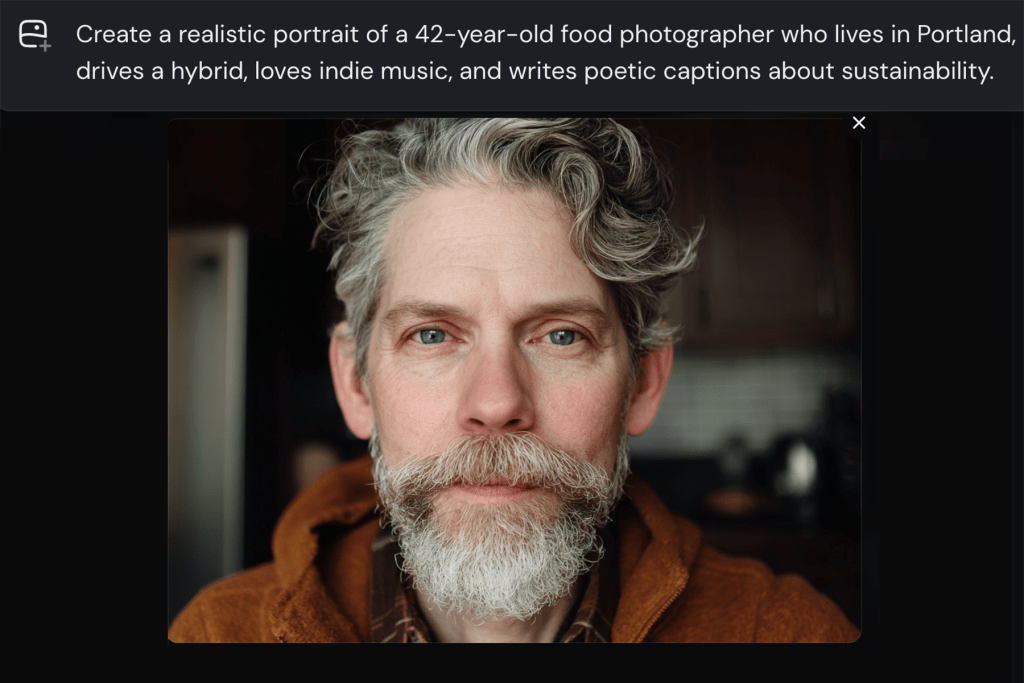
Give your persona a name and, if you like, a visual.
Use AI tools (like DALL·E or Midjourney) to describe them in detail — as shown in the header image above. You can start with something as simple as:
“Create a realistic portrait of a 42-year-old food photographer who lives in Portland, drives a hybrid, loves indie music, and writes poetic captions about sustainability.”
Seeing your persona visually helps make them real. You start to notice the details — the expression, the energy, the personality behind the data.
Generate an image, print it, or pin it near your workspace. When you write, you’re not speaking to “your audience” — you’re speaking to them.
6. Create more than one if it fits.
Most creators serve more than one type of reader.
You might have:
- Two to four personas representing different audience journeys — for example, a Creative Explorer, a Community Connector, and a Monetization-minded Pro.
- Variations based on where they are in their journey — beginner, growing, established.
Start with one or two, then add more as patterns emerge.
Over time, you’ll notice which persona feels most “at home” with your voice.
7. Revisit and refine.
Your audience evolves — and so should your personas.
Check in every few months: what’s changed? Have their interests shifted? Has your niche matured?
A great creator grows with their audience.
Your persona isn’t carved in stone; it’s a living reflection of your readers.
Now let’s map what this looks like in action.
Here’s how the four audience journeys we explored in Step 4 translate into distinct personas — each with their own motivations, values, and content preferences.

Think of these as your core audience archetypes — each one representing a different way people connect with your work.
You may connect with more than one, but start with your core persona.
Once you know them deeply, expanding your reach becomes natural, not forced.
Common Mistakes to Avoid
1. Staying at the surface.
“25–45 years old” is a statistic, not a story. Keep digging.
2. Writing for a fantasy fan.
Your audience isn’t perfect. Real people have contradictions — honour that complexity.
3. Copying another creator’s followers.
Their audience isn’t yours. Build from your own values and voice.
4. Letting personas gather dust.
Update them. Watch how your “typical reader” grows as your content evolves.
Whether you use pen and paper or prompt an AI tool, the goal is the same — to see your audience not as data points, but as people.
📝 Your Turn
Now it’s time to build your own audience persona.
Take a few minutes to write (or type) your answers to the prompts below — and remember, this isn’t about perfection. It’s about clarity. The more vividly you can picture your reader, the more naturally your content will connect.
Start with the basics:
- Name
- Age / Location / Profession
- A day in their life
- What they eat, drive, wear, or listen to
Then go deeper:
- Biggest goal this year
- Biggest fear or frustration
- Beliefs or values that matter most
- What they need from you right now
- How you want them to feel after reading your next post
When you’re done, write a short paragraph describing this person as if you were introducing a close friend — and, if you like, use that description in an AI image generator to bring them to life visually.
Print their portrait or pin it near your workspace.
Then, the next time you publish, look at that face and think:
“This one’s for you.”
Next Up in the Academy
Now that you know who you’re creating for, it’s time to plan what to say — and where.
Step 6: Content Strategy will help you turn insight into structure: planning topics, mapping platforms, and building a creative rhythm that keeps your blog — and your connection — alive.
Stay tuned — in Step 6, we’ll turn insight into strategy.


 Knock Knock WHOIS There