
In Part One of this series, we explored what premium domain names are, how they differ from standard domains, and why some creators and brands choose them as part of a long-term identity strategy.
This follow-up post is more practical.
Premium names aren’t about urgency or impulse buying — they’re about intentional choice. If you’ve decided a premium name could make sense for your project, the next step is understanding where to find premium .blog names and what to expect when you register one.
A new way to browse premium .blog names
To make premium names easier to discover, we’ve introduced a Premium Name Discovery experience on my.blog.
Rather than starting with a blank search and hoping for the best, this experience is designed to help you browse premium .blog domains more intentionally — filtering by category, structure, and budget range before choosing a registrar.
This approach is especially useful if you’re exploring ideas, concepts, or themes, rather than searching for a single specific word.
Where to search for premium .blog names
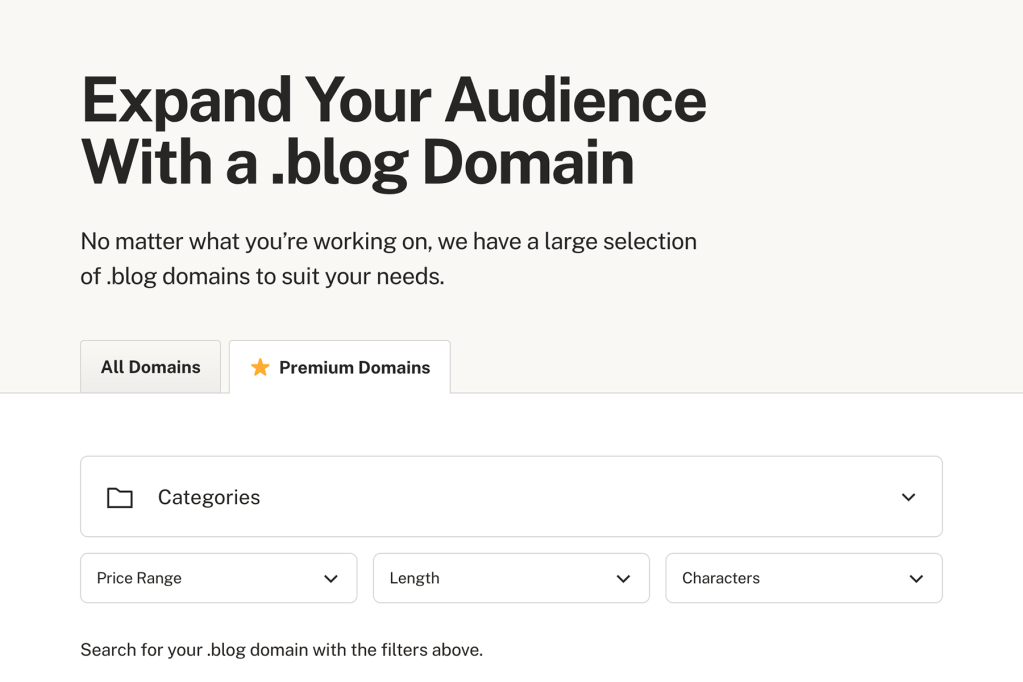
You can access premium .blog domains directly from the main navigation on my.blog.
At the top of the site, click Search Domains.
This takes you to a page titled:
“Expand Your Audience With a .blog Domain.”
From here, you’ll see two tabs at the top of the search experience:
- All Domains
- Premium Domains
To explore premium names specifically, select Premium Domains.
This switches the results to show only premium .blog inventory and unlocks additional filters designed to help narrow your search.
How to narrow your results
Once you’re browsing premium domains, you can refine results using the filters below the search bar. These filters are designed to help you explore based on how you think about names, rather than starting from a single keyword.
Categories
Use the Categories filter to browse premium names by theme — such as leadership, photography, food, wellness, technology, and more.
This is especially useful if you’re exploring category-based names, or looking for something that signals what your content is about at a glance.
Price range
Premium names are grouped into tiers, which give you a general sense of budget range.
Rather than showing exact prices at this stage, tiers help you explore what’s available within a range you’re comfortable considering.
Final pricing is set by registrars and shown when you click through to register.
Length
The Length filter lets you narrow results based on the number of characters in the domain name.
Shorter names are often easier to remember and type, while slightly longer names may offer more descriptive or expressive options.
Characters
The Characters filter allows you to include or exclude certain character types:
- letters
- numbers
- hyphens
For example, you can choose to exclude numbers or hyphens, or explore numeric-only names.
This can be particularly helpful for creators working across languages or markets.
What you’ll see when you find a premium name
When browsing premium results, you’ll typically see:
- the domain name
- confirmation that it’s a premium domain
- tier indicators rather than exact pricing
From there, you can click through to view registration options with participating registrars.
Exact prices are shown by the registrar at checkout, as registrars set their own retail pricing.
How pricing works
Premium domain pricing works differently from standard domains.
A few things to keep in mind:
- Premium names are priced higher due to rarity, memorability, and demand
- Pricing is annual; many registrars offer a discounted first year, so it’s important to check the renewal price before registering
- Final retail pricing is set by registrars, meaning the same domain may be priced differently depending on where you register it
Because of this, my.blog focuses on discovery and comparison, while registration and payment happen through the registrar you choose.
While premium names aren’t for everyone, for some creators and brands they offer long-term value by being easier to remember, more distinctive, and closely aligned with the ideas they want to publish around.
How to register a premium name
Once you’ve found a name you like:
- Select the domain from the search results
- Choose a registrar from the available options
- You’ll be taken directly to the registrar’s site, with the domain pre-selected
- Complete registration as you would with any domain purchase
After registration, DNS, hosting, and website setup can be managed separately from the domain itself.
Things to consider before you buy
As we talked about in our the first article titled “Premium Domain Names: What They Are — And Why Creators Might Want One”
You might want a premium domain name because of:
- Personal branding: the clearest expression of “you” online
- Category ownership through expertise
- Better visibility and memorability
However, before registering a premium name, it’s worth pausing to reflect on a few questions:
- Is this a long-term identity or a short-term campaign?
- Would a personal name or a category name better fit your goals?
- Are you comfortable with the ongoing annual cost?
- Would a standard domain be a better starting point right now?
Premium names aren’t the right choice for everyone — and that’s okay. For many creators, they become more appealing later, once direction and intent are clearer.
Brand-aligned names vs brand-owned names
In some cases, brands choose premium names that don’t match their company name exactly, but instead reflect a concept closely associated with their brand.
For example, an outdoor brand might choose a name like explorer.blog as a place to publish stories, ideas, or values connected to exploration and adventure.
A fashion or lifestyle brand might choose a name like sensuality.blog to explore themes that align with its identity, without tying the content directly to a product catalogue.
These kinds of domains are often used as editorial spaces, not marketing sites — places where brands can explore ideas, culture, or expertise connected to what they stand for.
If you’re considering this approach, it’s worth asking whether the name represents something your brand can genuinely speak to over time, rather than a short-term campaign or trend.
Looking ahead
Premium names are just one way creators and brands can think more intentionally about their online identity.
As discussed in Part One, the value of a domain isn’t just in availability — it’s in alignment. As you explore your options, the most important question isn’t what’s available, but what you want your name to represent over time.


 Knock Knock WHOIS There